
Seated Wheelchair Exercises: Keeping the Legs Active
Using a wheelchair does not mean lower-body exercise has to stop. For people who spend much of their day seated, exercises can be adapted to their abilities and performed directly from the wheelchair.
Maintaining movement and strength in the legs can be valuable for everyday function. Depending on the individual’s abilities, goals, and medical needs, a physiotherapist may incorporate exercises such as seated knee extensions and hip flexion into a personalized rehabilitation program.
The goal is not always independent walking. For some people, maintaining existing strength, participating more actively in transfers, repositioning the legs, or preserving movement can be meaningful rehabilitation goals.
Why Is Lower-Body Exercise Important for Wheelchair Users?
Spending more time seated does not mean the muscles of the legs no longer have an important role.
Lower-body strength and movement may contribute to everyday activities such as:
- Repositioning in the wheelchair
- Participating in transfers
- Standing with assistance when appropriate
- Moving the legs during daily activities
- Maintaining current physical abilities
- Supporting walking or stepping for those who are able
- Participating more actively in personal care
What meaningful function looks like will be different for every person. Exercise should reflect what the individual can safely do and what they want to maintain or improve.
Exercise 1: Seated Knee Extensions
A seated knee extension involves straightening the knee from a seated position and then returning the foot to the starting position with control.
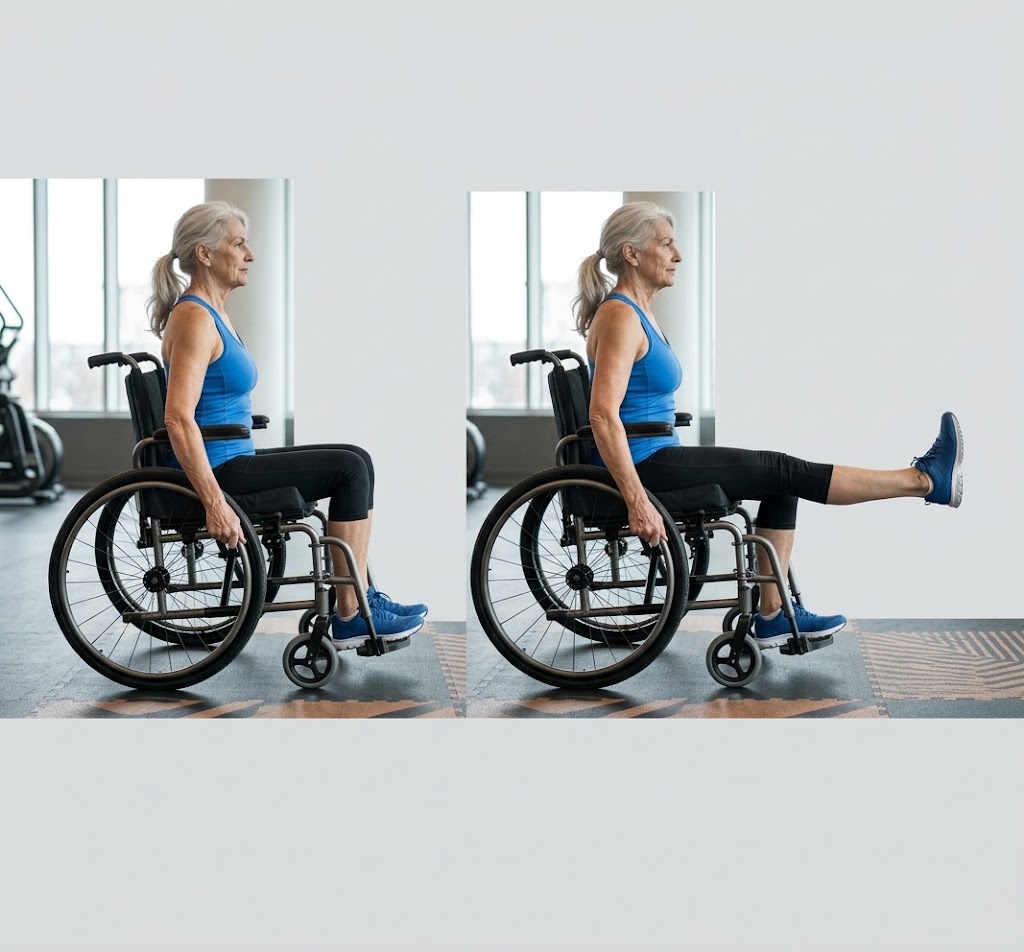
What muscles do knee extensions work?
Knee extensions primarily work the quadriceps, the group of muscles at the front of the thigh. These muscles are responsible for straightening the knee.
Quadriceps strength is involved in many functional movements, including standing up and participating in transfers.
Potential benefits
Depending on the individual, seated knee extensions may help:
- Maintain or improve quadriceps strength
- Practise controlled knee movement
- Support the strength used during transfers
- Maintain lower-body activity while seated
- Support standing ability when appropriate for the individual
The appropriate range, resistance, repetitions, and level of assistance should be selected based on the person’s current abilities.
Exercise 2: Seated Hip Flexion
Seated hip flexion involves lifting the thigh or knee upward while remaining seated and then lowering it with control.
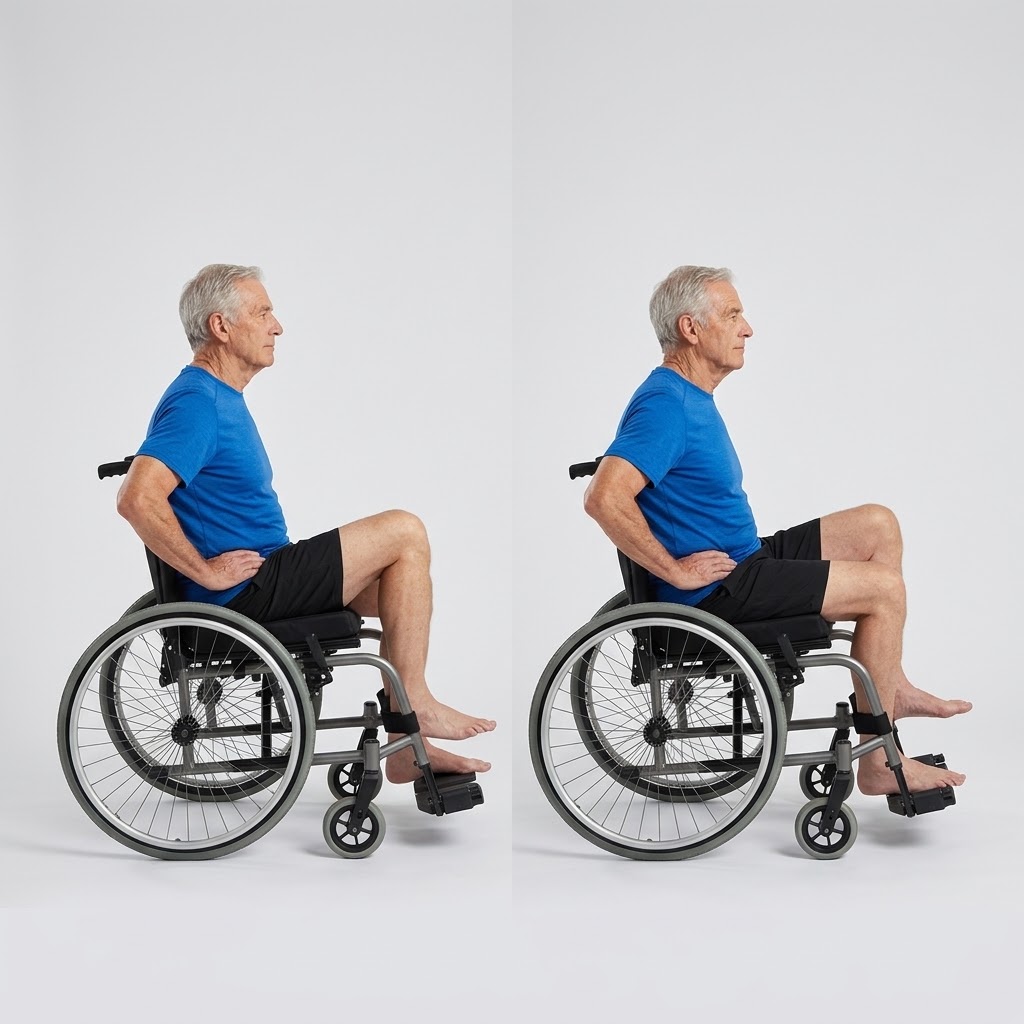
What muscles does hip flexion work?
Hip flexion works the muscles responsible for lifting the thigh toward the body.
This movement is used when lifting the leg during activities such as stepping and walking. It may also be useful when repositioning the legs during everyday activities.
Potential benefits
Seated hip flexion may help:
- Maintain hip muscle activity
- Practise lifting and controlling the leg
- Support movements involved in stepping
- Support walking for individuals who are able
- Assist with repositioning the legs
- Maintain lower-body movement while seated
The amount of movement may differ considerably between individuals. Lifting the knee higher is not necessarily better—the exercise should remain controlled and appropriate for the person.
Exercise Should Match the Person
There is no single wheelchair exercise program that is appropriate for everyone.
One person may be working toward standing more confidently during transfers. Another may want to maintain enough leg movement to assist a caregiver. Someone else may be working toward taking supported steps or returning to walking.
A physiotherapist can consider factors such as:
- Current leg strength
- Joint mobility
- Balance and trunk control
- Pain
- Medical conditions
- Ability to stand or bear weight
- Transfer ability
- Current mobility level
- Individual goals
From there, exercises can be selected and progressed according to what is safe and meaningful for that person.
The Goal Is Everyday Function
Rehabilitation should not be measured only by the number of repetitions someone completes.
For a wheelchair user, progress may mean being able to participate more during a transfer, reposition a leg more easily, maintain current strength, tolerate more activity, or perform a movement with greater control.
Your mobility may look different. Your movement still matters.
Mobile Physiotherapy for Wheelchair Users
FisioMed Mobile Clinic brings personalized physiotherapy directly to the patient’s home.
An in-home assessment allows the physiotherapist to understand how the person moves within their everyday environment and develop a rehabilitation program based on their abilities and goals.
Treatment may include:
- Seated lower-body exercises
- Strength and mobility training
- Transfer practice
- Supported standing when appropriate
- Balance exercises
- Walking practice when appropriate
- Wheelchair and mobility-aid assessment
- Caregiver education
- Personalized home exercise programs
Keep Moving at Your Level
Using a wheelchair does not mean exercise has to stop. Movements such as seated knee extensions and hip flexion can be incorporated into an individualized rehabilitation program to help maintain lower-body movement and strength.
The most important thing is that exercise matches the person—not the other way around.
Looking for personalized rehabilitation at home? FisioMed provides in-home physiotherapy in Surrey, Langley, White Rock, Delta, Ladner and other Lower Mainland communities.
This article provides general educational information and does not replace individualized medical or physiotherapy advice. Exercise selection, resistance, repetitions, and assistance should be based on the individual’s health, abilities, and rehabilitation goals.


Leave A Comment