
3 Leg Exercises for Seniors: Training for Everyday Movement
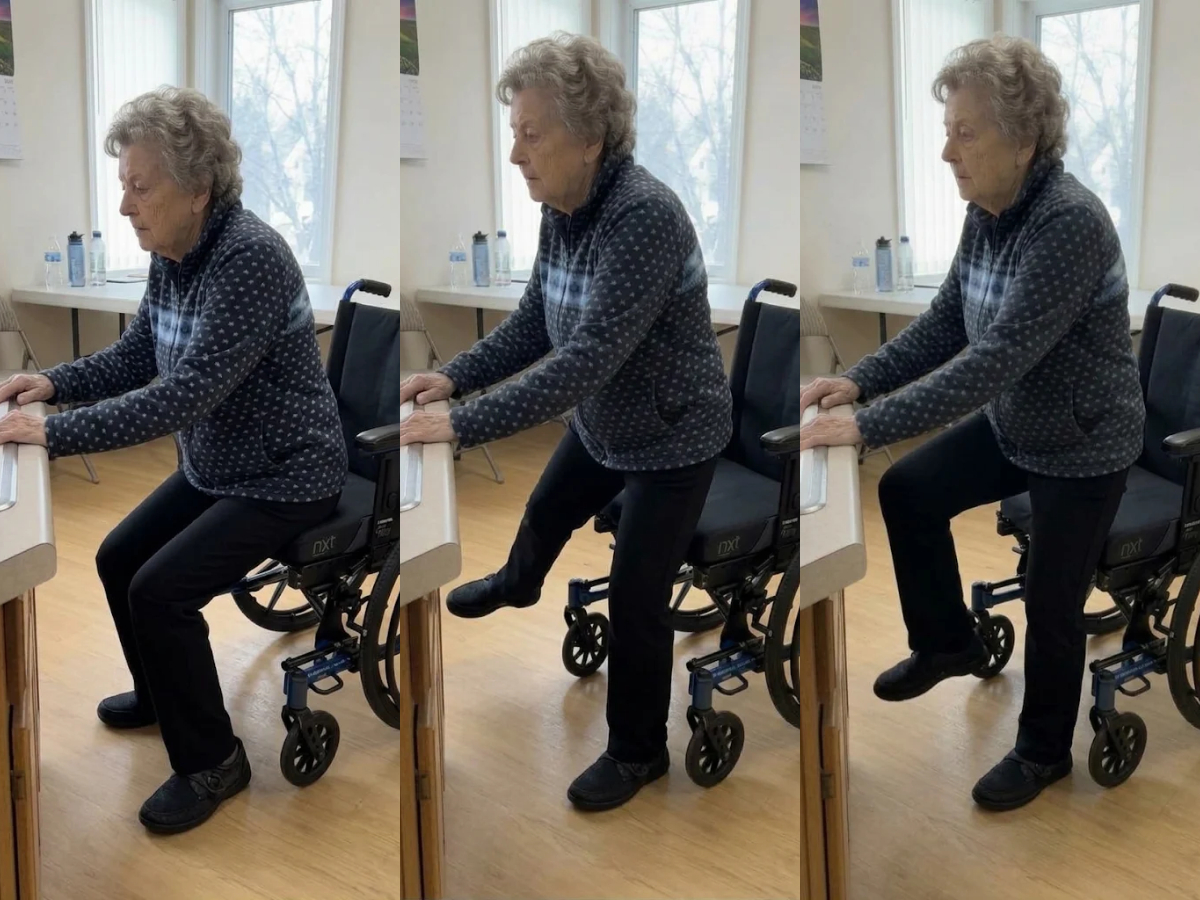
Everyday movement happens in many different directions. Getting out of a chair, walking through the home, stepping over an obstacle, and maintaining balance all require the legs and hips to work in different ways.
For seniors, this is why an exercise program should not focus on just one movement or muscle group. Different exercises can target different physical abilities that contribute to everyday mobility.
Three examples are squats, standing hip abduction, and standing hip flexion. Each movement has a different purpose and can be adapted to the individual’s current strength, balance, and mobility.
Why Train the Legs in Different Directions?
The body does not move in only one direction during daily activities.
Walking requires the legs to move forward while the hips help stabilize the body from side to side. Getting out of a chair requires the hips and knees to generate enough force to lift the body. Stepping over an object requires enough control to lift the leg and clear the foot.
Training different movements can therefore help prepare the body for different demands of everyday mobility.
Exercise 1: Squats
Squats involve bending through the hips and knees before returning to a standing position.
This movement works several major muscles of the lower body, particularly the muscles around the hips and thighs.
How Can Squats Help Seniors?
Squats can help strengthen muscles involved in everyday activities such as:
- Getting up from a chair
- Sitting down with control
- Standing
- Transfers
- Moving between different surfaces
The exercise does not need to be a deep squat to be useful. The appropriate depth, support, and number of repetitions depend on the individual’s strength, mobility, balance, and comfort.
Exercise 2: Standing Hip Abduction
Standing hip abduction involves moving one leg out to the side while maintaining control through the rest of the body.
The exercise primarily works muscles around the outside of the hip.
Why Is Hip Abduction Important?
The outer hip muscles contribute to pelvic stability and side-to-side control, particularly during standing and walking.
Strengthening these muscles may support:
- Standing stability
- Walking control
- Side-to-side movement
- Pelvic control
- Everyday mobility
A stable counter or another appropriate support may be used depending on the person’s balance.
Exercise 3: Standing Hip Flexion
Standing hip flexion involves lifting the thigh or knee forward while maintaining an upright position.
The muscles responsible for hip flexion help lift the leg during movements such as stepping and walking.
How Does Hip Flexion Support Everyday Movement?
Hip flexion is involved when:
- Taking a step
- Walking
- Lifting the leg
- Clearing the foot from the ground
- Navigating everyday obstacles
For seniors, the goal is not necessarily to lift the knee as high as possible. The movement should remain controlled and appropriate for the individual’s abilities.
Every Exercise Should Have a Purpose
An exercise program is more meaningful when the movements connect to the activities a person wants or needs to perform.
Squats, hip abduction, and hip flexion may look like three separate exercises, but each works on a different component of everyday mobility.
Squats can help develop strength for sitting, standing, and transfers.
Hip abduction can help work on the side-to-side stability required during standing and walking.
Hip flexion can help strengthen the movement used to lift the leg during stepping and walking.
Together, these exercises provide different challenges for the lower body.
Exercise Should Be Individualized
There is no single exercise level that is appropriate for every senior.
The amount of hand support, range of movement, number of repetitions, resistance, and difficulty should reflect the individual’s:
- Current strength
- Balance
- Mobility
- Pain or symptoms
- Medical history
- Confidence
- Functional abilities
- Personal goals
Some seniors may require both hands on a stable support, while others may safely require less assistance. Progression should be gradual and based on the individual rather than on what another person can do.
Mobile Senior Physiotherapy With FisioMed
FisioMed Mobile Clinic brings personalized senior physiotherapy directly to the patient’s home.
Receiving physiotherapy at home allows exercises to be adapted to the person’s abilities and the environment where everyday movement actually happens.
Treatment may include:
- Lower-body strengthening
- Balance training
- Walking and mobility practice
- Transfer training
- Functional exercises
- Fall-risk reduction
- Mobility-aid assessment
- Personalized home exercise programs
Our goal is not simply to have seniors complete exercises. It is to help them work on the strength, balance, and mobility that support meaningful everyday activities.
Train for Everyday Movement
Squats, standing hip abduction, and standing hip flexion each challenge the lower body in a different way.
For seniors, combining appropriate exercises can help create a more functional approach to maintaining strength and mobility.
Train with purpose. Keep moving toward greater independence.
Contact FisioMed Mobile Clinic to arrange an in-home senior physiotherapy assessment and receive a program personalized to your abilities and goals. FisioMed provides in-home physiotherapy in Surrey, Langley, White Rock, Delta, Ladner and other Lower Mainland communities.
This article provides general educational information and does not replace individualized medical or physiotherapy advice. Exercises should be selected and progressed according to the individual’s health, abilities, balance, and rehabilitation needs

Leave A Comment