
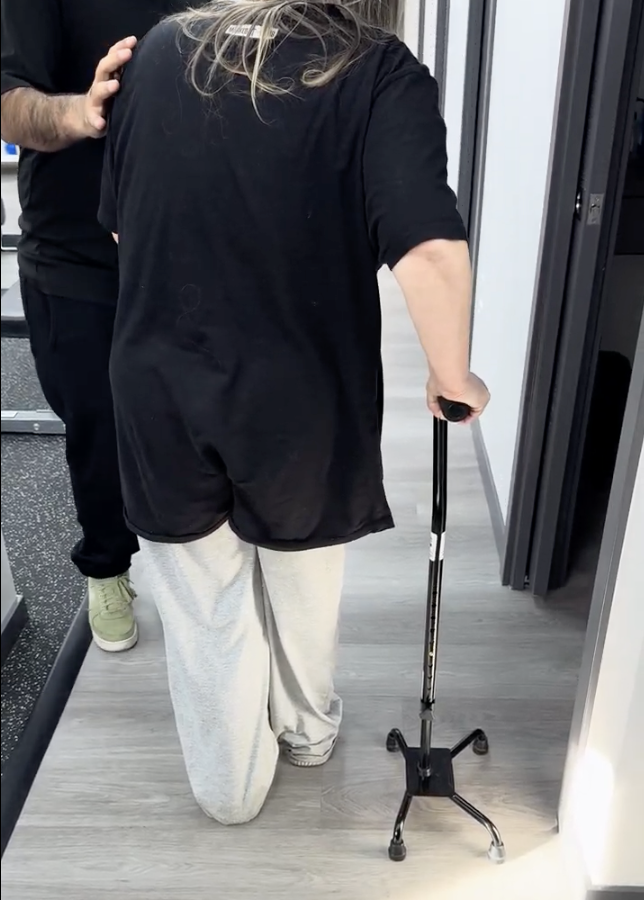
What Is a 4-Pronged Cane and Who Can Benefit From One?
Maintaining the ability to walk safely and independently can make an enormous difference in a person’s quality of life.
When balance, weakness, pain, injury or a medical condition makes walking more difficult, a mobility aid may provide additional support.
One option is the 4-pronged cane, also commonly called a quad cane.
But when should someone use a quad cane instead of a traditional cane or walker?
What Is a 4-Pronged Cane?
A quad cane looks similar to a conventional walking cane, but instead of having one point of contact with the floor, it has a base with four feet.
The wider base increases the cane’s contact area with the ground and can provide greater stability than a conventional single-point cane.
There are different sizes of quad canes as well. A larger base generally provides greater support but can also be heavier and somewhat more cumbersome during walking.
Who May Benefit From a Quad Cane?
A quad cane may be considered when someone requires more support than a conventional cane provides but does not necessarily require the level of assistance provided by a walker.
This may include people experiencing balance difficulties, lower-extremity weakness or weakness affecting one side of the body.
Quad canes are also commonly considered during rehabilitation following certain neurological conditions, injuries or surgeries when additional support is required.
For some patients, a quad cane can also be an intermediate step while progressing from a walker toward a conventional cane or independent walking.
Benefits of a 4-Pronged Cane
One of the main benefits is increased stability.
Having four points of contact creates a broader base of support than a conventional cane. This can be helpful for someone who doesn’t feel sufficiently secure using a single-point cane.
Another practical advantage is that many quad canes can stand upright on their own. This can make the cane easier to access beside a chair or during certain daily activities.
A quad cane can also allow a person to maintain one-handed mobility, leaving the other hand available for certain activities.
How Should You Walk With a Quad Cane?
Proper technique matters.
When a cane is being used because one leg is weaker or painful, it is commonly held in the hand opposite the affected leg.
A typical sequence is:
- Move the cane forward.
2. Step forward with the affected/weaker leg.
3. Step through with the stronger leg.
The exact walking pattern may differ depending on the person’s condition and rehabilitation goals.
The entire base of the quad cane should be positioned securely on the floor before significant weight is placed through it.
Cane Height Matters
A cane that is too high or too low can make walking awkward and may reduce its effectiveness.
As a general clinical starting point, the handle is commonly adjusted around wrist-crease level when standing upright, producing a small amount of elbow bend when holding the cane.
Individual positioning may need to be adjusted based on posture, arm length, gait and the reason the cane is being used.
Quad Cane vs. Regular Cane
More support isn’t always better.
A quad cane provides additional stability, but its larger base can make it slower and more cumbersome to advance than a single-point cane. The feet also need to clear the person’s own feet during walking.
Someone with relatively good balance who only requires a small amount of support may therefore function better with a conventional cane.
Conversely, someone with substantial balance impairment or who needs significant weight-bearing assistance may require more support than a quad cane can safely provide, such as an appropriate walker.
That’s why mobility aids should ideally be selected based on an individual’s abilities rather than simply choosing the device that appears most supportive.
Physiotherapy Can Help Determine the Right Walking Aid
At Pain Free Health, our physiotherapists can assess factors such as:
Balance • Leg strength • Walking pattern • Transfers • Endurance • Fall risk • Home environment • Functional mobility
We can then recommend an appropriate mobility aid, adjust it to the correct height and teach the individual how to use it safely.
For older adults in particular, the ultimate goal isn’t simply to provide more support.
It’s to find the least restrictive mobility aid that still allows the person to move safely and confidently.
Need Help With Walking or Balance?
Fisiomed provides physiotherapy, balance training, gait rehabilitation and senior rehabilitation in Surrey, Langley, White Rock, Delta, Ladner and other Lower Mainland communities.


Leave A Comment