
Learn how seniors can practise single-leg standing safely beside a sturdy counter. Fisiomed Mobile Clinic provides in-home physiotherapy in Surrey, Langley, White Rock, Delta, and Richmond.
Single-Leg Standing for Seniors: How to Practise Balance at Home
Good balance helps us move confidently through everyday life. We rely on it when walking, climbing stairs, stepping over an object, getting dressed, entering a shower, or recovering after an unexpected misstep.
Balance can change with age, inactivity, injury, illness, medication, vision changes, weakness, and certain medical conditions. Although no single exercise is right for everyone, practising a supported single-leg stand can be an effective way for suitable individuals to challenge their balance at home.
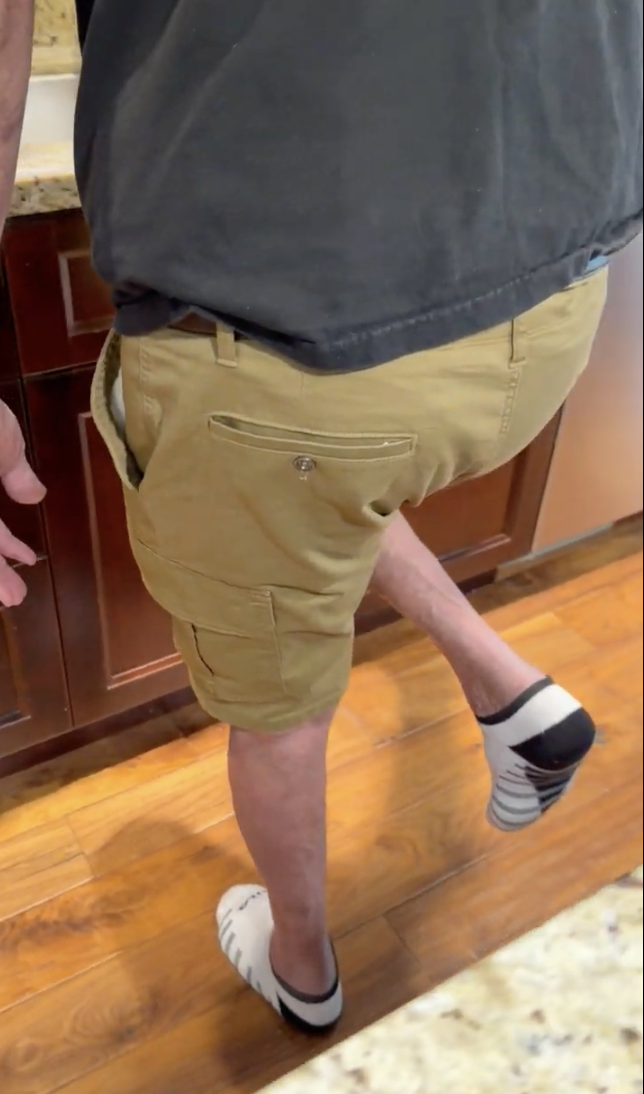
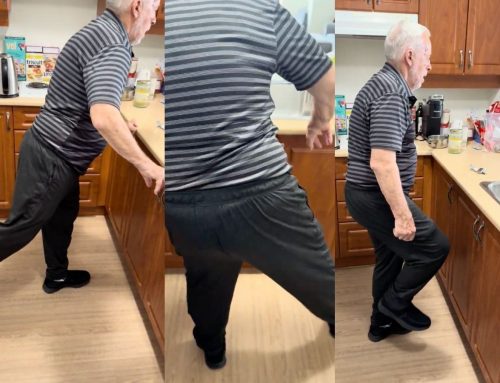
In the accompanying video, a senior stands on one leg while keeping both hands hovering just above a sturdy counter. The counter is close enough to provide support if it becomes necessary.
Why Is Single-Leg Balance Important?
Walking repeatedly requires us to support our body on one leg while the other leg moves forward. Although each single-leg phase is brief, it happens with almost every step.
Single-leg control is also used when:
- Climbing stairs
- Stepping over a curb
- Putting on pants
- Entering or exiting a bathtub
- Changing direction
- Navigating uneven ground
- Recovering from a small loss of balance
Practising this position may help improve awareness, confidence, and control. It should be part of a broader program that also considers strength, walking, endurance, mobility, and the individual’s home environment.
How to Perform a Supported Single-Leg Stand
Set up the area
- Choose a sturdy, fixed counter that will not move.
- Clear away loose rugs, water, cords, pets, and other hazards.
- Wear secure, supportive footwear.
- Stand close enough to the counter that you can reach it without leaning.
- Have someone nearby if your physiotherapist has recommended supervision.
Perform the exercise
- Stand upright with your feet comfortably apart.
- Begin with both hands resting on the counter.
- Shift your body weight slowly onto one leg.
- Lift the opposite foot slightly from the floor.
- Keep your hips level and look straight ahead.
- Hold the position only while you remain in control.
- Return the lifted foot to the floor.
- Rest and repeat on the other side.
Breathe normally and avoid holding your breath.
What Does “Hovering the Hands” Mean?
Hovering means keeping the hands immediately above a stable counter without continuously leaning on it.
This position allows the person to challenge balance while keeping support close. However, hovering is a progression—not the correct starting point for everyone.
A safer progression may be:
- Both hands holding the counter
- Light pressure through both hands
- Fingertip support
- One-hand support
- Hands hovering just above the counter
Some people should continue using hand support. Removing the hands is not necessary if doing so makes the exercise unsafe or excessively difficult.
How Long Should You Hold the Position?
There is no universal starting time.
A beginner may hold the position for only a few seconds. Someone with greater balance ability may be able to hold it longer.
A physiotherapist may recommend several short, controlled attempts rather than one long attempt with excessive wobbling. Quality and safety are more important than achieving a particular number.
Stop the attempt when:
- You need to grab the counter
- Your standing foot moves
- You begin leaning excessively
- You can no longer maintain control
- You feel pain, dizziness, or unusual symptoms
Place both feet on the floor, regain a stable position, and rest before trying again.
Should You Expect to Wobble?
A small amount of movement can occur when balance is being challenged. However, the objective is not to produce the largest possible wobble.
An appropriate challenge should require concentration while still allowing the person to recover safely. Repeatedly losing balance, grabbing the counter forcefully, hopping, or twisting suggests that the exercise may be too difficult.
A physiotherapist can modify the task by changing:
- The amount of hand support
- The length of each attempt
- The height of the lifted foot
- The position of the feet
- The number of repetitions
- The visual environment
- The type of footwear or standing surface
Do not close your eyes or stand on an unstable surface unless a qualified professional has specifically assessed and prescribed that progression.
Common Mistakes to Avoid
Standing too far from the counter
If the counter cannot be reached immediately, it cannot provide useful support.
Using movable furniture
Do not rely on a rolling chair, folding table, appliance door, or unstable piece of furniture.
Lifting the foot too high
The foot only needs to clear the floor. Lifting the knee higher does not automatically make the exercise better.
Holding your breath
Continue breathing normally throughout the exercise.
Progressing too quickly
Move from firm support to lighter support gradually. Do not remove your hands simply because another person can perform the exercise that way.
Continuing through concerning symptoms
Stop if you experience dizziness, faintness, chest pain, unusual shortness of breath, sudden weakness, new numbness, or a significant increase in pain.
Who Should Seek Professional Guidance First?
Speak with a physiotherapist or physician before trying this exercise independently if you:
- Have fallen recently or fall frequently
- Cannot stand safely without assistance
- Experience unexplained dizziness or fainting
- Have new weakness, numbness, or neurological symptoms
- Recently had an injury, illness, or surgery
- Have been given weight-bearing restrictions
- Use a walking aid
- Have significant vision problems
- Are uncertain whether the exercise is appropriate
Some individuals may require direct supervision or a different balance exercise.
Balance Exercise and Fall Prevention
Balance training is an important part of physical activity for older adults, but fall prevention should not rely on one exercise alone.
A comprehensive approach may include:
- Leg and trunk strengthening
- Walking practice
- Appropriate use of mobility aids
- Footwear assessment
- Vision and medication review
- Home-hazard identification
- Cardiovascular activity
- Practising functional tasks
- Education for family members and caregivers
The best program is one that reflects the person’s specific difficulties, health, goals, and home environment.
Mobile Balance Physiotherapy in Surrey, Langley, White Rock, Delta, and Richmond
Fisiomed Mobile Clinic provides in-home physiotherapy for seniors throughout:
- Surrey
- Langley
- White Rock
- Delta
- Richmond
A home visit allows the physiotherapist to assess balance where daily activities actually occur. The assessment may consider the patient’s floors, stairs, bathroom, furniture, footwear, walking aids, and usual movement patterns.
Mobile physiotherapy services may include:
- Balance and fall-risk assessments
- Individualized balance exercises
- Strength and mobility training
- Walking-aid assessment
- Stair practice
- Rehabilitation following injury, illness, or surgery
- Home-safety recommendations
- Caregiver education
- Personalized home-exercise programs
Practise Balance at the Right Level
Single-leg standing beside a stable counter can be a useful balance exercise for some seniors. The safest starting position may involve holding the counter firmly, while hovering the hands may be an appropriate progression for someone who has demonstrated adequate control.
Balance training should be challenging enough to encourage improvement but controlled enough to avoid unnecessary risk.
Looking for senior physiotherapy or balance training at home in Surrey, Langley, White Rock, Delta, or Richmond? Contact Fisiomed Mobile Clinic to arrange an in-home physiotherapy assessment.
This article provides general education and does not replace individualized medical or physiotherapy advice. Exercise selection and supervision should reflect the individual’s abilities, health, and fall risk.

Leave A Comment