
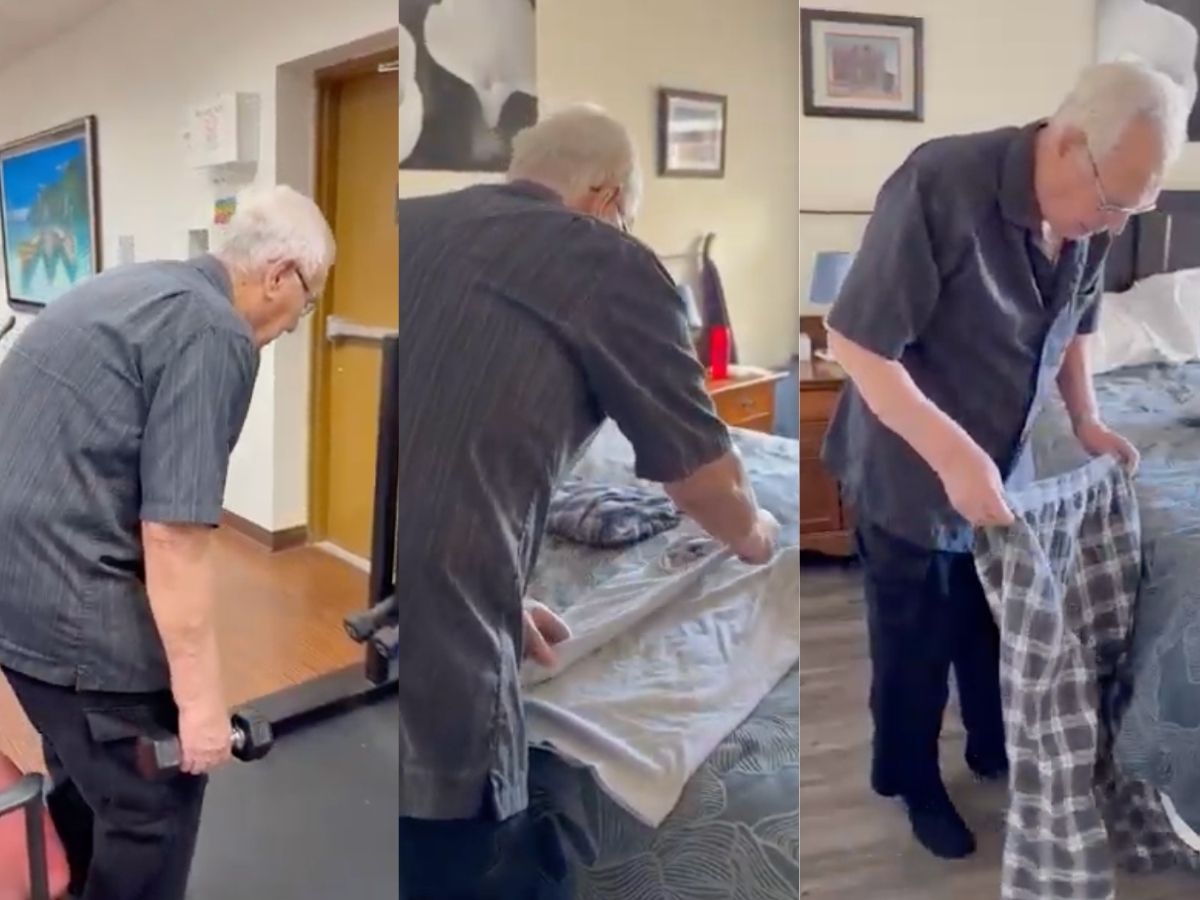
When we think about rehabilitation for older adults, we often think about strengthening exercises, balance drills, stretching, and range-of-motion work.
These are important parts of rehabilitation—but they shouldn’t always be the end goal.
For many seniors, the things that matter most are much more practical:
- Getting out of a chair safely
- Walking confidently around the home and community
- Turning without losing balance
- Climbing stairs
- Reaching into a cupboard
- Carrying groceries
- Getting on and off the floor
- Maintaining independence
This is where task-oriented training becomes especially valuable.
What Is Task-Oriented Training?
Task-oriented training focuses on repeatedly practising meaningful, real-life movements rather than only training individual muscles or physical qualities in isolation.
The idea is simple:
If we want someone to get better at a task, we need to practise that task.
For example, strengthening the quadriceps can help someone develop the capacity required to stand from a chair. But if standing from a chair is difficult, we should also actually practise sit-to-stand.
The same principle applies to walking, turning, stairs, reaching and carrying.
Strength Is Important—But Transfer Matters
Traditional strengthening still has an important role in senior rehabilitation.
If someone has significant weakness in their hips or legs, strengthening those muscles may be necessary. If ankle mobility is restricted, mobility exercises may be appropriate. If cardiovascular endurance is poor, we may need to gradually improve conditioning.
But we also need to ask:
Are these improvements transferring into everyday life?
A patient may become stronger on a leg-extension exercise but still struggle to get out of their favourite chair.
They may improve on a static balance exercise but still feel unsteady when turning quickly in the kitchen.
They may walk well through a quiet clinic but struggle when navigating a busy grocery store.
This is why rehabilitation should bridge the gap between physical capacity and real-world function.
Making Rehabilitation More Functional
Task-oriented rehabilitation can include practising activities such as:
Sit-to-stand: Changing chair height, reducing the use of the arms, increasing repetitions or adding resistance.
Walking: Progressing speed, distance, direction changes, obstacles and different surfaces.
Turning: Practising controlled turns, faster turns and turns while walking.
Stairs: Progressing step height, repetitions, speed and eventually carrying objects when appropriate.
Reaching: Reaching in different directions, at different heights and from different positions.
Carrying: Progressing the weight and distance of objects to replicate groceries, laundry or household tasks.
The therapist can gradually manipulate the difficulty while maintaining an appropriate level of safety.
Progressively Challenge the Environment
Real life isn’t perfectly predictable.
We rarely walk in a completely straight line on a flat, empty surface without distractions.
That means later stages of rehabilitation may need to include more complex challenges.
Depending on the individual, this could mean navigating obstacles, changing direction, walking at different speeds, carrying an object, stepping onto different surfaces or completing tasks that require attention to more than one thing at once.
The goal isn’t simply to make exercises harder.
The goal is to make rehabilitation more representative of the environment the person needs to function in.
Rehabilitation Should Be Individualized
There is no single exercise program that is appropriate for every older adult.
A healthy 70-year-old wanting to return to hiking has very different rehabilitation needs from an 85-year-old recovering from a hip replacement or an older adult with a history of falls.
A physiotherapist should consider factors such as strength, balance, mobility, pain, medical history, cognition, confidence, home environment and the person’s individual goals.
From there, rehabilitation can progressively move toward the activities that matter most to that person.
The Bigger Goal: Independence
For older adults, successful rehabilitation shouldn’t only be measured by how much weight someone can lift or how long they can hold a balance position.
We should also be asking:
Can they get out of a chair more easily?
Can they walk farther and with greater confidence?
Can they safely navigate their home and community?
Can they continue doing the activities that give them independence and quality of life?
Strength, mobility, balance and cardiovascular capacity provide the foundation.
Task-oriented training helps turn that capacity into meaningful function.
At Fisiomed, our approach to senior rehabilitation focuses on helping older adults maintain and regain the movement skills they need for everyday life.
Because better rehabilitation isn’t just about getting stronger.
It’s about getting better at living.
Looking for senior physiotherapy or balance training at home in Surrey, Langley, White Rock, Delta, or Richmond? Contact Fisiomed Mobile Clinic to arrange an in-home physiotherapy assessment.
This article provides general education and does not replace individualized medical or physiotherapy advice. Exercise selection and supervision should reflect the individual’s abilities, health, and fall risk.

Leave A Comment