
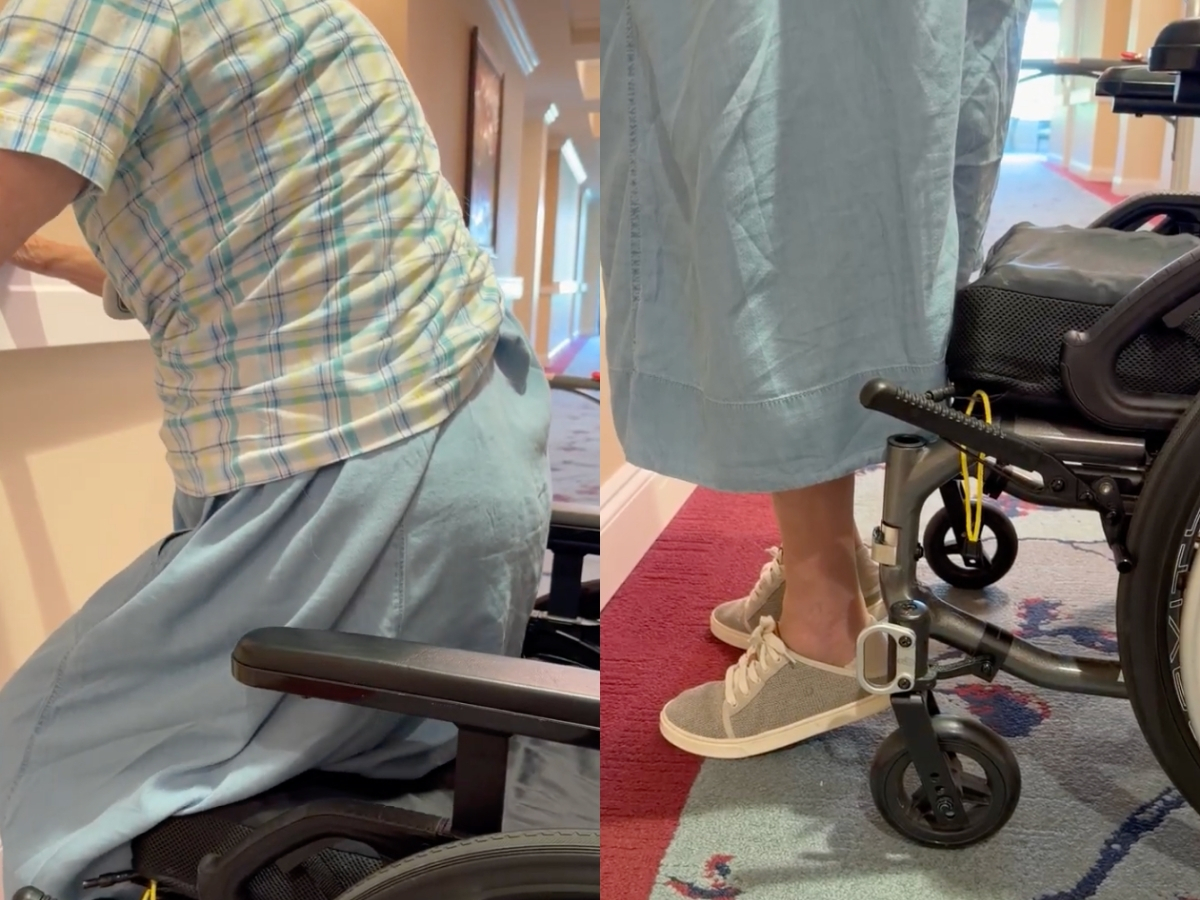
Using a wheelchair does not always mean that a person is unable to stand or participate in lower-body exercise.
Some wheelchair users can stand for short periods with support, while others may be able to complete transfers or take a few assisted steps. When it is safe and appropriate, supported standing exercises can help maintain strength and function.
Two useful examples are supported squats and heel raises performed at a secure railing.
The Goal Is Meaningful Function
Exercise goals should reflect the individual—not a general expectation that everyone must walk independently.
For a person who uses a wheelchair, meaningful goals may include:
- Standing during a transfer
- Moving safely between the wheelchair and bed
- Helping a caregiver during personal care
- Maintaining the ability to bear weight
- Improving standing tolerance
- Preventing further loss of strength
- Taking a few supported steps
- Participating more actively in daily activities
Even a small improvement in strength or standing ability may make everyday tasks easier for the patient and caregiver.
Exercise 1: Supported Squats at a Railing
A supported squat is a controlled bending and straightening of the hips and knees while holding a secure railing.
This movement strengthens the quadriceps, gluteal muscles, and other muscles involved in standing and sitting.
Potential benefits
Supported squats may help improve:
- Sit-to-stand ability
- Transfer participation
- Hip and thigh strength
- Control when lowering into a chair
- Standing tolerance
- Lower-body stability
How the exercise is performed
- Position the person at a secure railing or professionally approved support.
- Place the wheelchair behind them, lock both brakes, and move footplates safely out of the way.
- Stand with the feet in a comfortable, stable position.
- Hold the railing with both hands.
- Slowly bend the hips and knees as if beginning to sit.
- Keep the movement within a safe and comfortable range.
- Press through the feet and return to standing.
- Pause before beginning the next repetition.
The person should move slowly and avoid dropping suddenly toward the wheelchair.
A shallow squat may be appropriate at first. Exercise depth and repetitions should be selected by the treating professional.
Exercise 2: Supported Heel Raises
Heel raises strengthen the calf muscles. These muscles contribute to standing stability and help the body move forward during walking.
Potential benefits
Supported heel raises may help with:
- Calf strength
- Ankle control
- Standing balance
- Weight-bearing tolerance
- Supported walking when appropriate
- Lower-leg muscle activity
How the exercise is performed
- Stand facing a secure railing and hold it with both hands.
- Keep the feet approximately hip-width apart.
- Slowly lift both heels from the floor.
- Keep the body upright rather than leaning forward.
- Pause briefly at the top.
- Lower the heels slowly and with control.
The movement may be small initially. Quality and control are more important than lifting the heels high.
Safety Comes First
Standing exercises are not appropriate for every wheelchair user. Before trying them, a healthcare professional should consider:
- The person’s ability to bear weight
- Leg and trunk strength
- Balance
- Joint pain or restrictions
- Bone health
- Blood pressure and dizziness
- Heart and respiratory conditions
- Recent surgery or injury
- Ability to understand and follow instructions
- The level of assistance required
- The stability of the railing and surrounding area
A wheelchair should not be used as the only support during standing exercise. When it is positioned behind the person for safety, the brakes must be locked and the footplates moved out of the way.
Close supervision or hands-on assistance may be necessary. A gait belt may be used by someone trained in its safe application.
Exercise should stop if the person experiences pain, dizziness, chest discomfort, unusual shortness of breath, sudden weakness, or a loss of balance.
How Many Repetitions?
There is no universal number that is appropriate for everyone.
Some people may begin with only a few repetitions followed by a seated rest. Others may safely complete additional repetitions or sets.
The appropriate amount depends on:
- Current strength
- Standing tolerance
- Medical condition
- Symptoms
- Exercise technique
- Recovery after each effort
- The amount of assistance required
A rehabilitation professional can establish a safe starting point and gradually adjust the program.
Standing Exercise Can Support Independence
The value of standing exercise is not limited to walking.
Maintaining lower-body strength may help a person participate more actively in transfers, dressing, toileting, and other daily activities. It may also reduce the physical assistance required from family members or caregivers.
Progress may be gradual. Completing one more controlled repetition, standing slightly longer, or requiring less assistance can still be meaningful.
Fisiomed Mobile Clinic Can Help
Fisiomed Mobile Clinic provides personalized rehabilitation in the patient’s home.
We assess the person’s strength, balance, transfers, wheelchair mobility, standing ability, medical needs, and home environment. We can then develop an exercise program that reflects what the person can safely do and what they want to achieve.
Treatment may include:
- Supported standing exercises
- Transfer practice
- Seated and lower-body strengthening
- Balance activities
- Walking practice when appropriate
- Wheelchair and mobility-aid assessment
- Caregiver education
- A personalized home exercise program
Our focus is not on comparing one person’s abilities with another’s. It is on helping each patient maintain or improve the function that matters in their daily life.
If you or someone you love uses a wheelchair and would benefit from an individualized exercise program, contact Fisiomed Mobile Clinic to arrange an in-home assessment.
This article provides general educational information. Standing exercises should only be attempted after an appropriate professional assessment and with the recommended level of assistance.
🌐 www.fisiomed.ca
📧 info@fisiomed.ca