
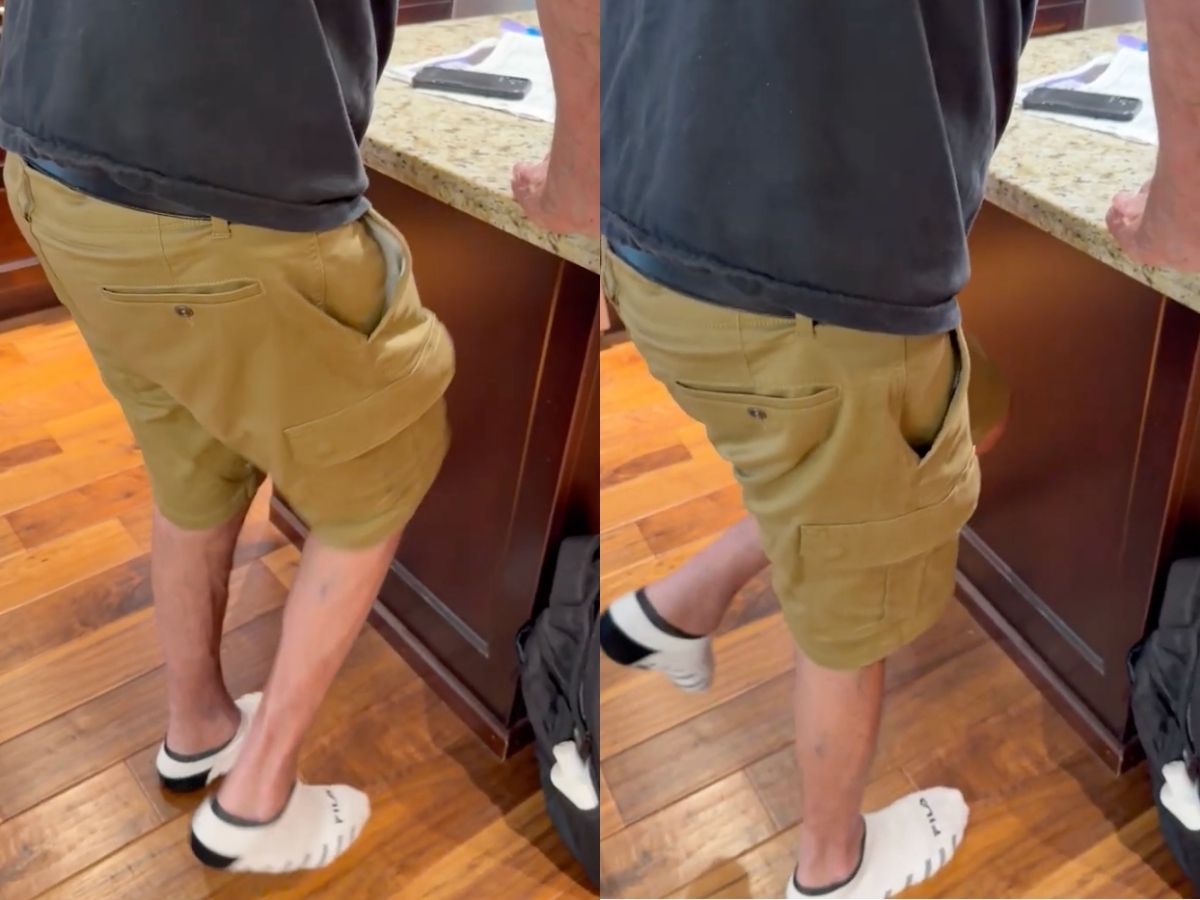
Learn how seniors can use supported marching at a sturdy counter to add gentle cardio at home. Fisiomed Mobile Clinic serves Surrey, Langley, White Rock, Delta, and Richmond.
Supported Marching for Seniors: A Simple Way to Add Cardio at Home
Regular physical activity is important at every age, but going outside for a walk or attending a gym is not always practical. Weather, reduced balance, limited mobility, recent illness, or low confidence may make traditional forms of exercise more difficult for some older adults.
Supported marching at a sturdy kitchen counter is one accessible way to introduce short periods of standing activity at home.
The exercise involves holding a stable surface and alternately lifting each foot, as if marching on the spot. Depending on the individual’s starting fitness level, it may be performed for approximately 1–5 minutes, with rest breaks as needed.
What Is Supported Marching?
Supported marching is a standing exercise performed while holding a stable surface for assistance.
Unlike walking through the home, the exercise can be completed in one place. The counter provides hand support, while the repeated leg movement may increase breathing and heart rate.
Support does not eliminate the possibility of losing balance. The exercise should only be performed when standing activity is appropriate for the individual.
Potential Benefits of Marching at the Counter
Depending on the person’s health and abilities, supported marching may help:
- Introduce gentle cardiovascular activity
- Increase heart rate and breathing
- Improve leg endurance
- Break up periods of prolonged sitting
- Practise alternating weight between the legs
- Build confidence with standing activity
- Support mobility needed for daily activities
Canadian guidance recommends that adults aged 65 and older include a combination of aerobic activity, strengthening, and balance-focused activity in their routines. People who cannot meet the full recommendations should participate according to their abilities and health conditions. Read Canada’s physical-activity guidance.
Supported marching may contribute to an active routine, but it does not replace all recommended forms of exercise.
How to Perform Supported Marching
Set up safely
- Choose a sturdy counter that will not move when you hold it.
- Remove loose rugs, cords, water, clutter, and other hazards from the area.
- Wear secure, supportive footwear.
- Stand close enough to the counter that you do not need to lean or reach.
- Keep a stable chair nearby if you need to sit and rest.
Begin the movement
- Stand tall with both hands resting securely on the counter.
- Position your feet a comfortable distance apart.
- Shift your weight gently onto one leg.
- Lift the opposite foot as high as is comfortable.
- Return the foot to the floor with control.
- Repeat with the other side.
- Continue alternating at a steady, comfortable pace.
- Breathe normally throughout the exercise.
Avoid pulling forcefully on the counter, leaning far forward, or lifting your knees higher than you can safely control.
How Long Should a Senior March?
Exercise should be matched to the person’s current capacity—not someone else’s performance.
A suggested starting range is 1–5 minutes, but some people may need to begin with less than one minute.
For example:
- March for 30 seconds.
- Rest while standing securely or sitting.
- Repeat if you feel steady and comfortable.
- Gradually increase the length or number of intervals over time.
Progress only one part at a time. You might first increase from 30 seconds to 45 seconds rather than immediately marching faster, lifting the knees higher, and reducing hand support.
The goal is controlled, sustainable activity—not exhaustion.
How Hard Should It Feel?
At a moderate intensity, your heart may beat faster and you may breathe more deeply, but you should generally still be able to speak.
The appropriate intensity varies considerably between individuals. An activity that feels easy for one senior may be demanding for another.
Heart conditions, respiratory conditions, medications, recent illness, pain, and reduced fitness can all affect exercise tolerance. A healthcare professional can help establish an appropriate starting level.
When Should You Stop?
Stop exercising and seek appropriate assistance if you experience:
- Chest pain or pressure
- Dizziness or faintness
- Severe or unusual shortness of breath
- A racing or irregular heartbeat that concerns you
- Sudden weakness
- New numbness
- Loss of balance
- Sharp or rapidly increasing pain
- Symptoms that feel unusual or alarming
Call emergency services for severe, persistent, or potentially life-threatening symptoms.
Muscle effort and a gradual increase in breathing can be expected during activity, but symptoms should not be ignored simply because you are exercising.
Who Should Get Advice Before Trying This Exercise?
Consult a physician or physiotherapist before beginning if you:
- Have recently had surgery, an injury, or a fall
- Have been told to restrict standing or weight-bearing
- Need assistance to stand or walk
- Frequently lose your balance
- Experience unexplained dizziness or fainting
- Have uncontrolled heart, blood-pressure, or breathing concerns
- Have new or worsening neurological symptoms
- Are uncertain whether this exercise is appropriate
Some people may need supervision, a different support surface, a seated alternative, or another exercise entirely.
Is Holding the Counter Cheating?
No. Appropriate support can make an exercise more accessible and help a person practise movement with greater confidence.
However, the counter should be treated as support—not as a guarantee against falling. It must be firmly fixed and able to tolerate the pressure placed through the hands.
Do not use a movable chair, rolling table, unstable piece of furniture, or appliance door for support.
Reducing hand support is not automatically the goal. Any progression should depend on the individual’s balance, strength, safety, and treatment objectives.
Making Supported Marching Part of a Complete Program
Older adults benefit from a varied routine that considers:
- Aerobic endurance
- Leg and upper-body strength
- Balance
- Flexibility and mobility
- Functional activities
- Recovery and rest
A physiotherapist can determine where supported marching fits within that program and recommend an appropriate duration, frequency, intensity, and progression.
Mobile Senior Physiotherapy in Surrey, Langley, White Rock, Delta, and Richmond
Travelling to a clinic may be challenging for seniors with reduced mobility, pain, fatigue, or limited transportation.
Fisiomed Mobile Clinic provides in-home physiotherapy services throughout:
- Surrey
- Langley
- White Rock
- Delta
- Richmond
An in-home physiotherapist can assess the person’s mobility, balance, strength, exercise tolerance, and actual home environment. This makes it possible to create a program using the surfaces, stairs, furniture, and space available in the patient’s home.
Mobile physiotherapy for seniors may include:
- Personalized home exercises
- Strength and endurance training
- Balance and fall-risk assessment
- Walking and mobility practice
- Rehabilitation following injury, illness, or surgery
- Walking-aid assessment
- Caregiver education
- Recommendations for safer movement at home
Start at the Right Level for You
Supported marching can be a practical way for some seniors to introduce brief periods of cardiovascular activity at home. Start at a manageable level, use a truly stable surface, and increase the activity gradually.
The best exercise is not simply the most challenging one. It is an activity that is appropriate for your health, meaningful to your goals, and performed consistently and safely.
Looking for mobile physiotherapy in Surrey, Langley, White Rock, Delta, or Richmond? Contact Fisiomed Mobile Clinic to arrange an in-home senior physiotherapy assessment.
This article provides general education and does not replace individualized medical or physiotherapy advice. Exercise recommendations should be adapted to the individual’s health, abilities, and clinical needs.
🌐 www.fisiomed.ca
📧 info@fisiomed.ca