
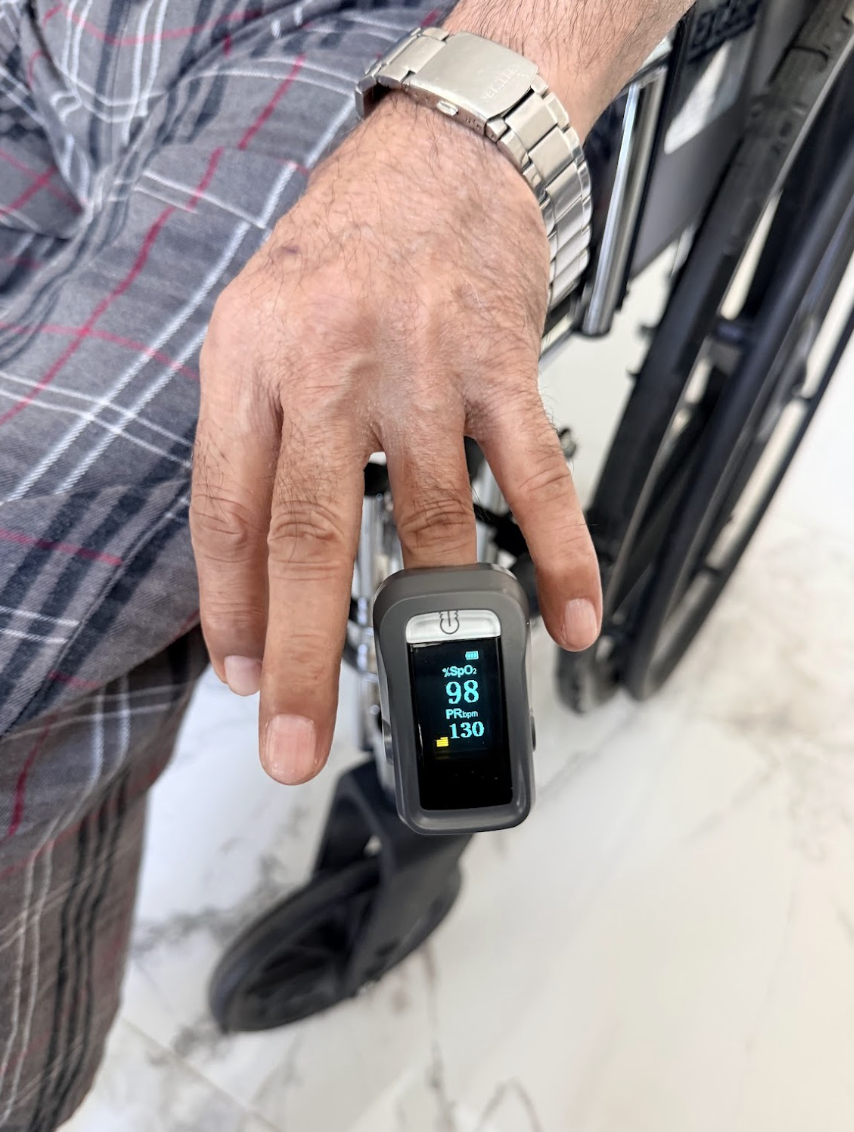
Exercise can help maintain strength, endurance, mobility, and independence, but the right level of activity is different for everyone. At FisioMed Mobile Clinic, we may use a small device called a pulse oximeter before, during, and after exercise to help monitor how your body responds to activity.
What Is a Pulse Oximeter?
A pulse oximeter is a small device placed on the finger. It estimates oxygen saturation in the blood, known as SpO₂, and pulse rate. By checking these measurements before, during, and after activity, we can also observe how they change with exercise and how they recover afterward.
Why Do We Monitor Exercise?
These readings provide useful information about how your body is responding to activity. However, they are not considered on their own. Your physiotherapist also considers your symptoms, breathing, fatigue, medical history, and perceived effort when deciding how to adjust your exercise program.
This monitoring can help us gradually progress activity while watching for signs that you may need to slow down, take a rest, or receive further assessment.
Personalized Exercise in Your Own Home
If weakness, reduced endurance, breathlessness, or recovery from a recent illness is making exercise difficult, personalized guidance may help you exercise with greater confidence.
FisioMed Mobile Clinic brings personalized assessment and supervised exercise directly to your home, allowing your program to be adapted to your individual needs and abilities.
Move safely. Build confidence. Work toward greater independence.
Contact FisioMed Mobile Clinic to arrange your in-home assessment and personalized exercise program.
Pulse-oximeter readings are estimates and should not be interpreted on their own. This article is for general education and does not replace medical advice.
🌐 www.fisiomed.ca
📧 info@fisiomed.ca