
Learn how proper squat technique, hip hinge movement, and physiotherapy can help reduce knee stress, improve strength, and support better movement.
Do Your Knees Hurt When You Squat?
Squats are one of the most effective exercises for building lower-body strength, but the way you perform them can make a significant difference in how your knees feel.
If you experience knee discomfort while squatting, it doesn’t always mean you should stop. Instead, it may be a sign that your movement pattern needs to be assessed.
One common factor is whether you’re relying more on your knees or your hips during the movement.
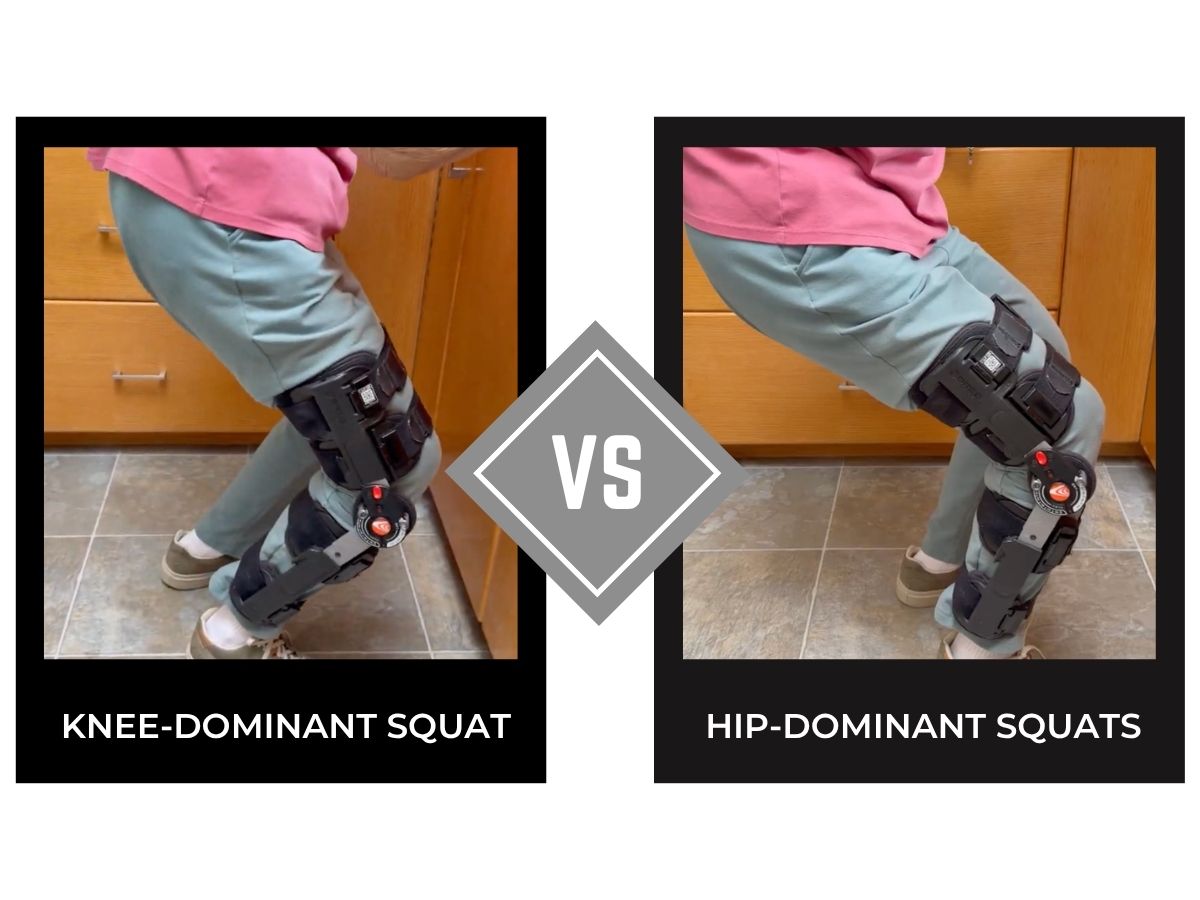
Knee-Dominant vs. Hip-Dominant Squats
In a knee-dominant squat, the knees travel farther forward and take on more of the load.
While this technique can be appropriate in certain situations, it may increase stress on the knee joint—particularly for people already experiencing knee pain or reduced lower-body strength.
A hip-dominant squat, often called a hip hinge, shifts more of the workload to the hips by engaging the glutes and hamstrings, two of the body’s strongest muscle groups.
Why Using Your Hips Can Help
Learning to use your hips more effectively during a squat may help:
- increase glute activation
- improve hip stability
- reduce stress on the knee joint
- promote more efficient movement
By allowing the hips to absorb more of the load, many people can perform squats with greater comfort and control.
Does This Mean Your Knees Should Never Move Forward?
Not at all.
A healthy squat naturally involves movement at both the hips and knees. The goal isn’t to stop the knees from moving forward—it’s to create a balanced movement pattern that matches your mobility, strength, and individual needs.
For people with knee pain, improving hip control and strength may help make squatting feel more comfortable.
How Physiotherapy Can Help
If squats consistently cause pain or discomfort, a physiotherapy assessment can help identify what’s contributing to the problem.
At FisioMed, we assess your movement patterns and create personalized rehabilitation programs designed to improve strength, mobility, stability, and movement quality so you can return to everyday activities and exercise with greater confidence.
Final Thoughts
Small changes in movement technique can make a big difference.
Learning how to use your hips effectively during a squat may help reduce unnecessary stress on the knees while improving strength, stability, and overall movement efficiency.
Take the First Step Toward Better Movement
If knee pain is making squatting or everyday activities more difficult, physiotherapy may help.
Discover how a personalized physiotherapy assessment can help improve your squat mechanics, reduce knee discomfort, and support healthier movement.
📞 Book your assessment today.
🌐 www.fisiomed.ca
📧 info@fisiomed.ca